
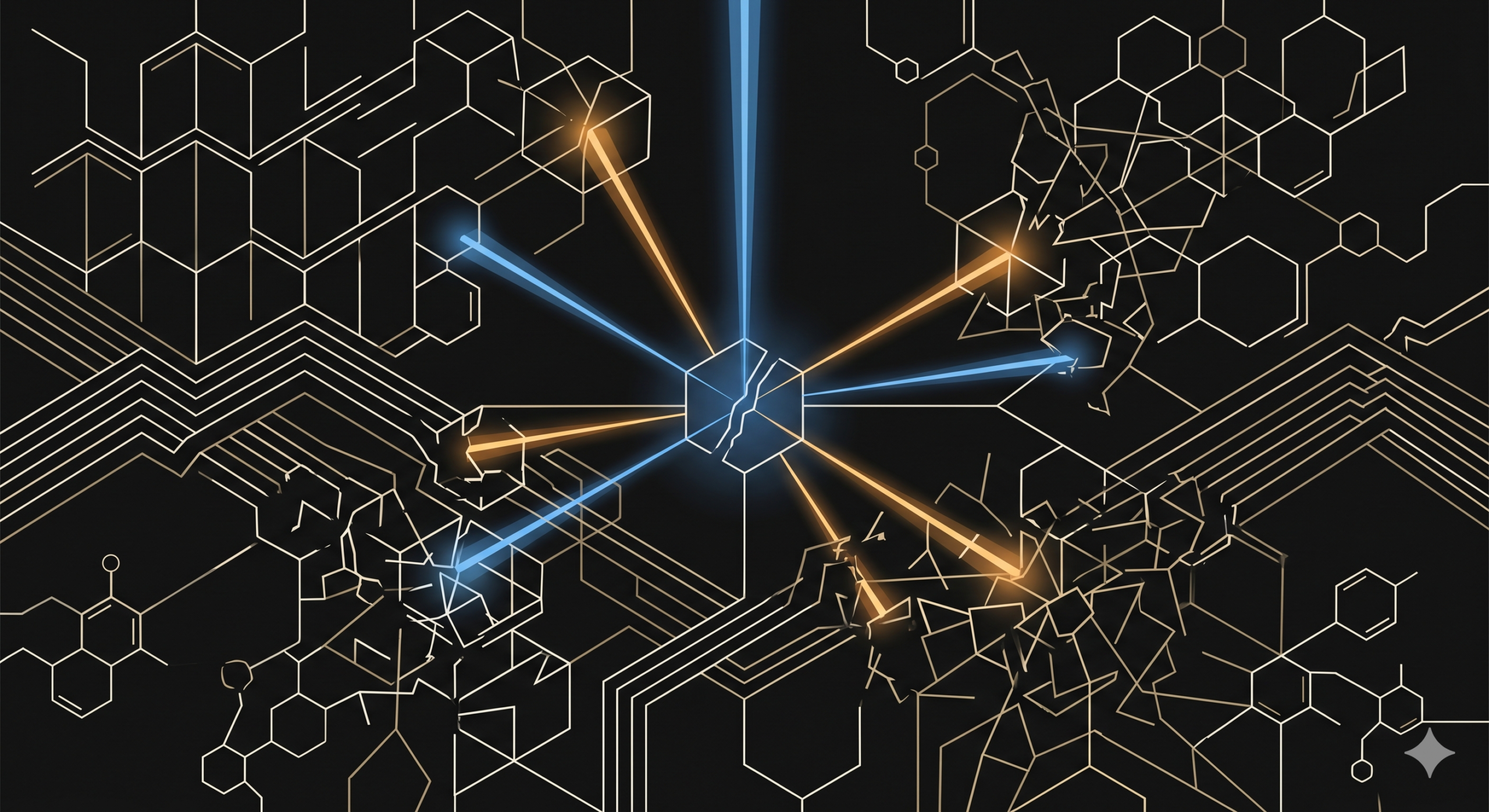
AT A GLANCE
- Precision Failure: Up to 20% of early-generation CRISPR edits result in unintended off-target cleavages depending on the specific guide RNA design.
- Chromosomal Shattering: Unmanaged double-strand breaks trigger chromothripsis, deleting or rearranging thousands of base pairs instantly.
- The p53 Tax: Successful edits heavily activate the p53 protein, causing edited cells to self-destruct or mutate into cancer.
- Legal Gridlock: Over a decade of aggressive patent litigation between the Broad Institute and UC Berkeley continues to freeze institutional capital.
HOW IT WORKS (The Mechanism)
CRISPR uses a guide molecule to hunt down specific DNA letters. It carries a protein called Cas9. Think of Cas9 as chemical scissors. Once the guide finds the target, the scissors cut both sides of the DNA ladder.
The system then relies on the cell to heal itself. The cell panics. It glues the broken ends back together fast. This process makes mistakes. Sometimes the guide makes a wrong turn. It binds to DNA that looks similar. The scissors cut the wrong gene. The cell repairs it blindly. This inserts random mutations directly into the genome.
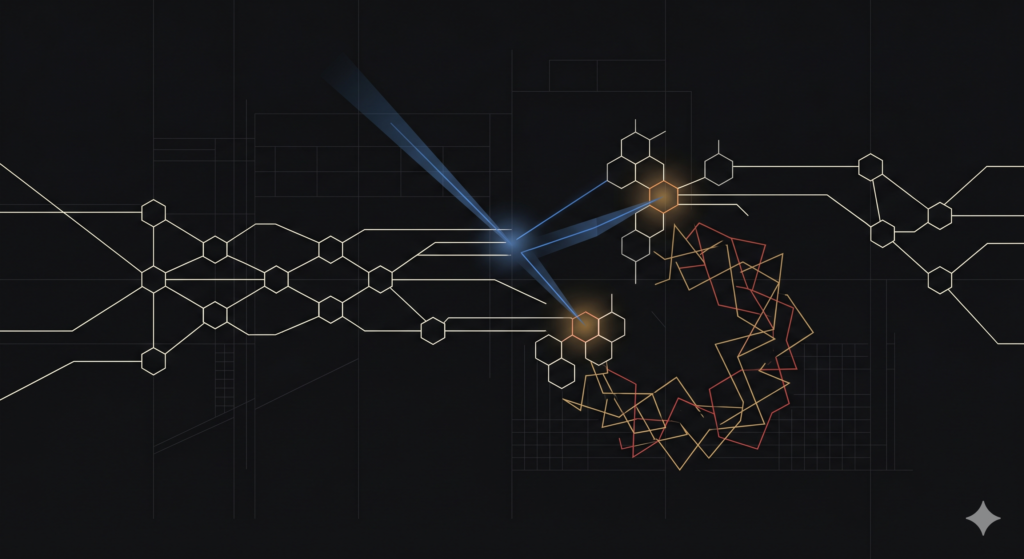
WHY IT MATTERS NOW (The Human Impact)
Investors pour billions into gene-editing startups banking on absolute precision. Biology refuses to comply. When a clinical trial modifies T-cells for cancer immunotherapy, off-target cuts accidentally silence tumor-suppressing genes. The therapy designed to cure cancer creates a new, more aggressive leukemia. This genomic toxicity terrifies the FDA. Regulatory bodies now demand exhaustive, million-dollar off-target sequencing for every single patient. This destroys the economic model of cheap, scalable gene therapies. Capital stalls. Startups burn cash mapping errors instead of curing diseases.
WHAT MOST PEOPLE MISS
Public relations teams sell CRISPR as precise molecular software. It operates more like a targeted explosive. The industry ignores the structural violence of the edit itself. Cutting DNA activates the p53 pathway. The cell recognizes the edit as severe damage and kills itself. To force the edit to survive, scientists temporarily suppress p53. This directly disables the human body’s primary defense against tumors. Beyond the physics, the technology remains trapped in court. The Broad Institute and UC Berkeley fight endlessly over the foundational intellectual property. This legal gridlock forces startups to pay massive royalties to multiple gatekeepers before they ever run a single clinical trial.
THE TRAJECTORY (What Happens Next)
Over the next 36 months, venture capital will abandon standard Cas9 double-strand break systems. Funding will aggressively rotate into “base editing” and “prime editing” startups that rewrite single DNA letters without entirely snapping the double helix.
KEY TERMS
- Double-Strand Break (DSB): A physical severing of both strands of the DNA double helix.
- Cas9: The primary endonuclease enzyme responsible for cutting the DNA at a targeted location.
- Guide RNA (gRNA): A synthetic RNA strand that directs the Cas9 enzyme to a specific genetic sequence.
- Chromothripsis: A catastrophic cellular event where a single chromosome shatters into dozens of pieces and stitches back together incorrectly.
- p53 Pathway: A critical biological mechanism that regulates cell division and initiates cell death to prevent tumor growth.
SOURCES
- Nature Medicine – “CRISPR-Cas9 genome editing induces a p53-mediated DNA damage response” (2018).
- Cell – “Frequent loss of heterozygosity in CRISPR-Cas9–edited early human embryos” (2020).
- U.S. Patent and Trademark Office (USPTO) – Interference Proceeding No. 106,115 (Broad Institute vs. UC Berkeley).
- Food and Drug Administration (FDA) – “Human Gene Therapy for Neurodegenerative Diseases; Guidance for Industry” (2022).
RELATED TOPICS
- Read Next: The Predatory Speed of Light: Latency Arbitrage in Market Microstructure
- Read Next: The Grid Frequency Decay: The Physics of Renewable Intermittencty
- Read Next: The Federal Reserve Swap Lines: The Invisible Piping of Dollar Hegemony
- Read Next: The Malacca Dilemma: Mathematical Modeling of Chokepoint Collapse