
AT A GLANCE
- Line Efficiency: HVDC reduces transmission losses to below 3% over 1,000-kilometer distances.
- The Vessel Shortage: As of 2026, only roughly 12 ships globally possess the mechanical capacity to lay massive 525kV cables.
- Capacity Gridlock: Tier 1 cable manufacturing capacity remains fully booked through 2028.
- VSC Dominance: Voltage Source Converters (VSC) bypass legacy thyristors, allowing grid operators to independently control reactive power.
HOW IT WORKS (The Mechanism)
AC grids suffer extreme reactive power losses underwater. HVDC fixes this. Converter stations at the shoreline transform the alternating current into direct current. They strip the wave flat.
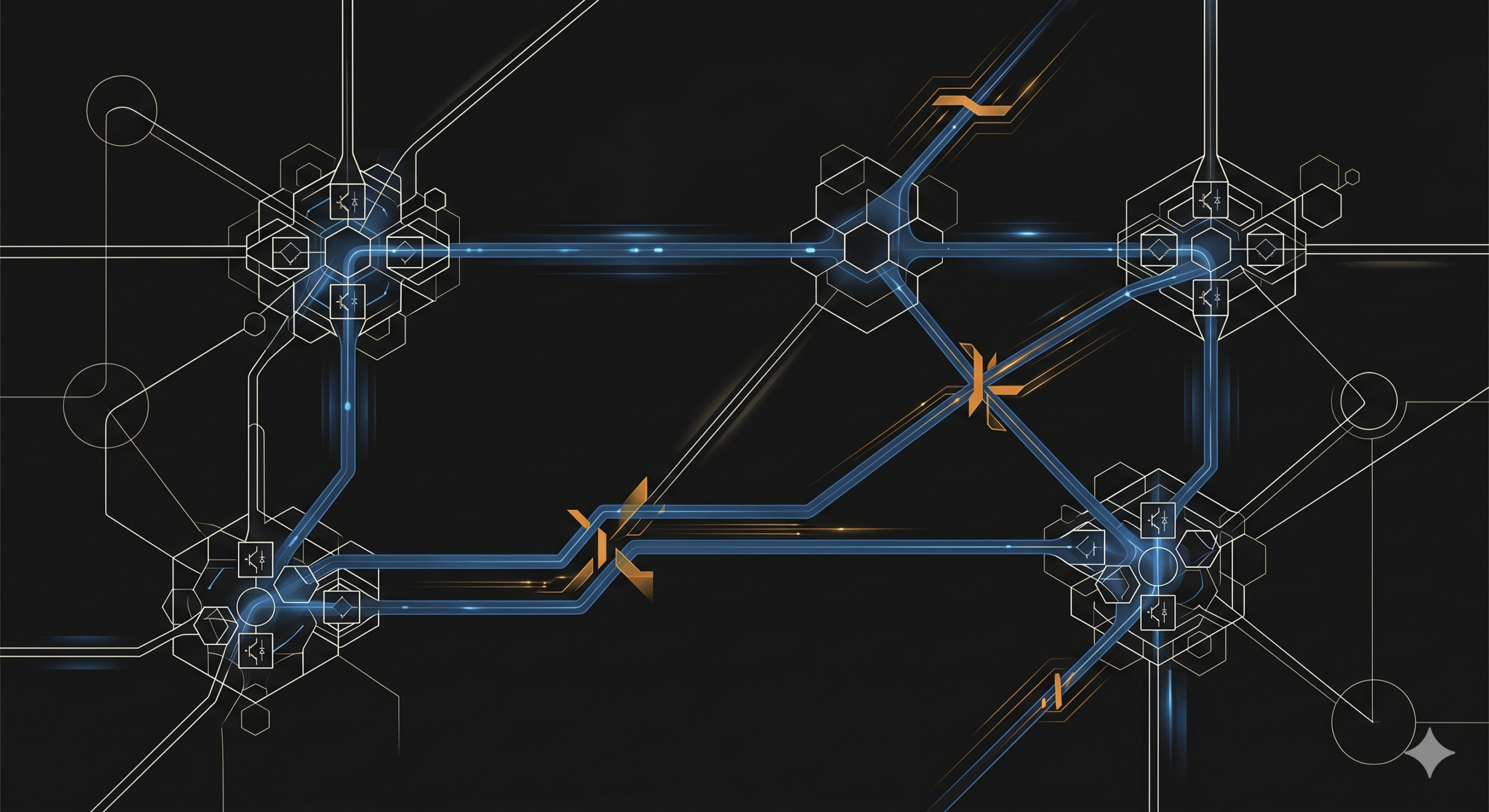
Legacy systems use thyristor valves. These rely on an active grid to push the current. Modern architecture uses Voltage Source Converters (VSC) built with insulated-gate bipolar transistors. These transistors self-commutate. They synthesize their own voltage. They can restart a completely dead grid from scratch.
The electricity travels through a copper or aluminum core. Extruded cross-linked polyethylene (XLPE) insulates the metal. This plastic barrier withstands 525,000 volts of constant electric pressure without shattering.
WHY IT MATTERS NOW (The Human Impact)
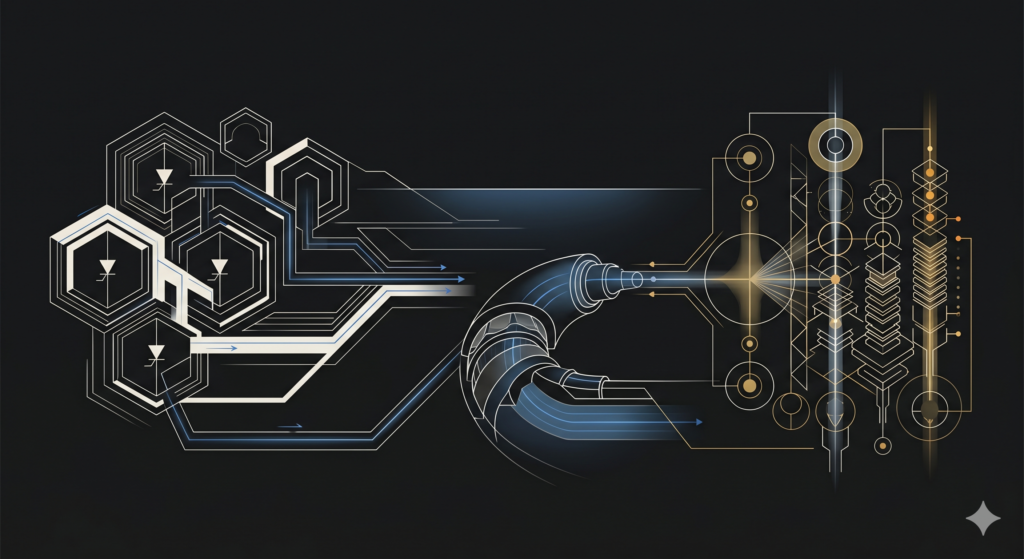
Continental supergrids dictate national energy security. Sovereign wealth funds pour billions into offshore wind generation. These turbines sit far offshore. They require VSC-HVDC to pump the power back to the mainland. Without these subsea cables, offshore wind farms strand their generated power entirely. Subsea cable deployment involves complex marine operations. It accounts for up to 60% of total project costs. When a fault occurs, operators face brutal logistics. Repair vessel utilization tops 85%. Day rates for these specialized ships now hit $290,000. The physics of long-distance transmission directly control the financial margins of the global energy transition.
WHAT MOST PEOPLE MISS
Mainstream analysts focus entirely on turbine scale. They ignore the strict physical limits of the polymer insulation. XLPE cables suffer from space charge accumulation. When subjected to extreme DC voltage over years, the plastic stores electrical charges. This polarization eventually triggers catastrophic breakdown. The true gridlock originates in the industrial supply chain. High-purity XLPE requires limited extrusion towers. Tier 1 manufacturers sit completely booked through 2028. As cables grow thicker to handle 525kV loads, standard vessels cannot manage the bend radius. Only 12 ships globally possess the physical capability to install these systems without excessive splicing. Nations cannot build supergrids if they cannot physically lay the plastic.
THE TRAJECTORY (What Happens Next)
Over the next 36 months, volatile copper pricing will force a massive shift toward aluminum conductor cores. Grid developers will aggressively deploy hybrid interconnector links that embed fiber-optic data transmission directly inside the HVDC armor.
KEY TERMS
- Voltage Source Converter (VSC): A self-commutating conversion technology that uses transistors to control active and reactive power independently.
- Thyristor: A solid-state semiconductor device that acts as a switch, heavily used in legacy Line Commutated Converter (LCC) stations.
- XLPE (Cross-linked Polyethylene): A specialized polymer insulation required to prevent electrical breakdown in high-voltage subsea cables.
- Space Charge Accumulation: The dangerous physical buildup of localized electrical charges inside a dielectric insulation material over time.
- Black Start: The capability of a converter station to restore power to a completely dead grid without relying on an external AC network.
SOURCES
- PatSnap – “HVDC transmission technology landscape 2026”.
- Astute Analytica – “Underwater Power and Cable Systems Market Size, Share” (2026).
- Mordor Intelligence – “Submarine Power Cable Market – Size, Trends & Growth” (2026).
- Market Growth Reports – “High Voltage Direct Current (HVDC) Cable Market Trends” (2026).
- National Grid – “HVDC: Voltage Source Converters”.
RELATED TOPICS
- Read Next: The Bacteriophage Tail Fiber: Overriding Pan-Drug Resistance
- Read Next: The Cryogenic Boil-Off Dynamics: The Economics of Global LNG Transit
- Read Next: The ADC Linker: The Kinetic Chemistry of Systemic Toxicity
- Read Next: The Ultra-Deepwater Blowout Preventer: Hydrostatic Pressure Dynamics and Containment Physics